
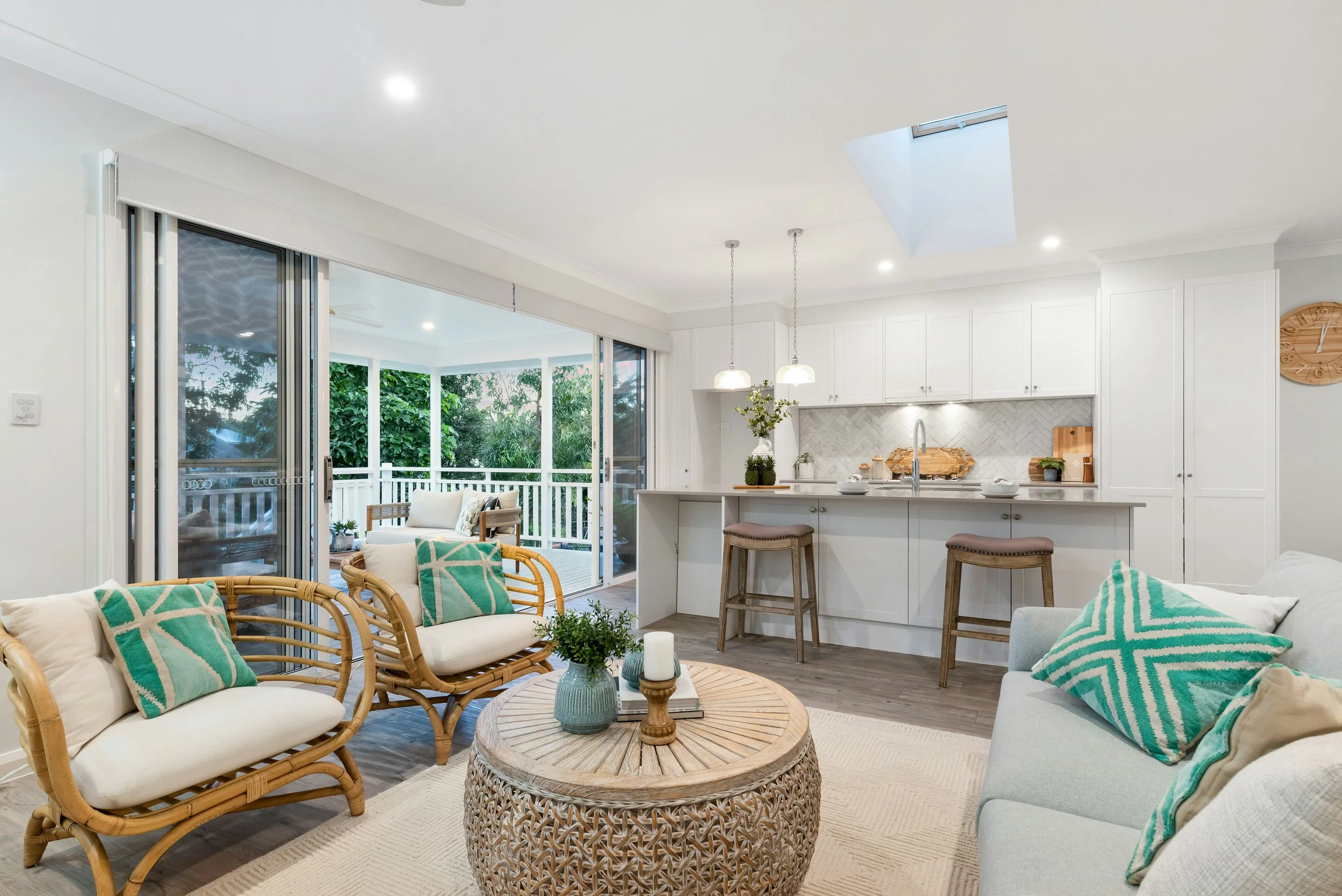
A two-bedroom house can be a contractor’s base for six weeks.
It can be a temporary home for a relocating family.
Or it can become a comfortable corporate apartment for a professional working away from home.
The property hasn't changed. The guest has.
And that simple distinction can have a surprisingly big impact on how a property should be furnished, equipped and marketed.
For property owners considering serviced accommodation, one of the biggest questions isn't simply, “How do I make this property attractive?”
It's:
“Who am I trying to make it attractive to?”
Because designing a property for everyone can sometimes mean designing it perfectly for nobody.
The Same Property Can Solve Three Very Different Problems
Imagine a modern two-bedroom property in a well-connected UK town.
It has:
Two bedrooms
A fully equipped kitchen
A comfortable living room
Fast WiFi
Parking
A dining table
A washing machine
A small outdoor space
On paper, it sounds ideal. But now imagine three different people arriving at the front door.
Guest One: The Contractor
They're working on a major project nearby. They've left home on Monday morning and won't be returning until Friday evening for the next six weeks.
They're tired when they arrive. They're not particularly interested in designer cushions or an impressive coffee table.
They want somewhere clean, comfortable and practical.
Can they park easily?
Can they cook a proper meal?
Is the Wi-Fi reliable?
Can they wash their work clothes?
Is the bed comfortable enough to get a good night's sleep?
Is the property close enough to the site that they're not spending another two hours commuting every day?
For this guest, functionality wins. The property is effectively their base between shifts.
Guest Two: The Corporate Professional
Now imagine the same property being used by a consultant working on a three-month assignment.
Their priorities overlap with the contractor's, but they're not identical. They may need somewhere suitable for video calls.
They might value a dedicated workspace, good lighting and a quiet environment. They may want easy access to restaurants, transport links and local amenities. They may also expect the property to feel polished and professional.
For this guest, the accommodation isn't just somewhere to sleep. It's part of their working environment.
Guest Three: The Relocating Family
Now change the scenario again.
A family has sold their home but their new property isn't ready yet. They need somewhere to live for five or six weeks.
Suddenly, the priorities change again. The kitchen becomes extremely important. So does storage. So does having enough living space for everyone to spread out.
A washing machine isn't a nice extra. It's essential. If there are children, practical considerations such as nearby shops, schools, parks and transport may become just as important as the property itself.
This guest isn't looking for somewhere to stay.
They're looking for somewhere to live temporarily.
So Who Should the Property Be Designed For?
The answer isn't necessarily one of them.
In many cases, the smartest approach is to create a property that works for multiple high-value guest types without becoming too generic.
That's where thoughtful property design comes in.
Rather than asking:
“What furniture should I buy?”
Start by asking:
“What problems does this property need to solve?”
That shift in thinking can completely change how a property is presented.
Designing for Contractors: Think Practical
Contractor accommodation needs to work around the working day.
A contractor may leave early, return late and spend long periods away from the property.
That makes practical features particularly valuable.
Priorities can include:
Convenient parking
Comfortable beds
A well-equipped kitchen
Washing and drying facilities
Reliable WiFi
Plenty of storage
Easy access to the property
A dining area
Durable, easy-to-maintain furnishings
The goal is to create a comfortable base where someone can eat, sleep, work and recharge.
For contractor accommodation, small practical details can have a much greater impact than expensive decorative features.
Designing for Corporate Guests: Make It Work
Corporate accommodation has another requirement. It needs to function as both a home and a place where someone can work.
A dining table might become a desk. A spare bedroom might become a quiet workspace.
Reliable Wi-Fi might be more important than a television with dozens of channels.
Good lighting, comfortable seating and a quiet environment can all make a difference.
Location matters too.For someone staying for several weeks, being close to a business district, project site, transport connection or major road can save hours of commuting.
That creates value that doesn't necessarily appear in the property photographs.
Designing for Relocating Families: Create a Temporary Home
A family between homes has a very different mindset.
They're already dealing with disruption.
Their furniture might be in storage. Their routines may have changed. Children may be adjusting to a new area.
The accommodation therefore needs to provide a degree of normality.
A proper kitchen allows the family to cook familiar meals.
A comfortable living room gives everyone somewhere to relax.
Multiple bedrooms provide privacy.
Laundry facilities make everyday life easier.
Storage prevents the property from feeling like a hotel room surrounded by suitcases.
For temporary accommodation, the difference between “somewhere we can stay” and “somewhere we can actually live” is enormous.
What Happens When You Design for All Three?
This is where things get interesting.
The three guest types have different reasons for travelling, but there is considerable overlap in what they value.
This is the opportunity. You don't necessarily need three completely different properties.
You need a well-designed property that solves the common problems shared by different guests.
The Importance of Flexible Serviced Accommodation
This is one of the reasons professionally managed serviced accommodation can be so versatile.
Demand isn't always predictable.
A property that attracts a corporate booking in one month could be suitable for a contractor team the next.
Later, the same property might provide temporary accommodation for a family whose home is being renovated or whose relocation has been delayed.
That flexibility can be valuable for property owners.
Instead of designing around one extremely narrow customer profile, the property can be positioned around the features that make it genuinely useful to several audiences.
Silverlake works with different types of accommodation requirements, including corporate stays, contractor accommodation and relocation needs. The key is matching the property to the guest rather than assuming every guest wants the same experience.
The Property Doesn't Need to Be Everything to Everyone
There's an important distinction between flexibility and trying to please everyone.
A property doesn't need a cinema room, gym, hot tub, games room and designer interiors to appeal to multiple markets.
Often, the fundamentals matter much more.
A comfortable bed.
A useful kitchen.
Good Wi-Fi.
Enough storage.
A practical workspace.
Reliable heating.
Convenient parking.
A clean, well-maintained interior.
A sensible location.
These features may not sound exciting.
But they're the things that make a property work.
And when someone is staying for several weeks or months, functionality becomes increasingly important.
The Real Question Property Owners Should Ask
Before spending money redesigning a property, ask yourself three questions:
Who could realistically need to stay here?
What would make their daily life easier?
Which improvements would benefit more than one type of guest?
That third question is particularly important.
A £500 investment in a feature that appeals to one narrow audience may not be as valuable as a £500 investment in something that improves the experience for every guest.
For example, upgrading Wi-Fi, improving the workspace or adding better storage could benefit contractors, corporate professionals and relocating families alike.
That's where smart property design becomes less about decoration and more about understanding demand.
A Property Should Solve a Problem
The most successful serviced accommodation isn't necessarily the property with the most expensive furniture.
It's the property that makes someone's situation easier.
For a contractor, it provides a comfortable base near work.
For a corporate professional, it provides somewhere to live and work.
For a relocating family, it provides stability while they're between homes.
Three completely different situations.
One property.
And that's the real opportunity for property owners.
Instead of asking, “How do I make my property look attractive?”
Ask:
“Who can this property make life easier for?”
Once you know the answer, everything else — from furnishing and facilities to pricing and marketing — becomes much easier to get right.
Final Thoughts
A successful serviced accommodation property doesn't have to be designed around a single type of guest.
It needs to be designed around real-life needs.
Contractors need practicality.
Corporate guests need somewhere they can comfortably live and work.
Relocating families need a temporary home that feels as normal as possible.
The clever part is finding the common ground.
When a property is comfortable, functional, flexible and professionally presented, it can serve multiple audiences without feeling like it was designed for nobody.
Because ultimately, the best property isn't the one that tries to appeal to everyone.
It's the one that solves the right problems for the right guests.