
The Difference Between Worker Accommodation and Standard Short-Term Lets
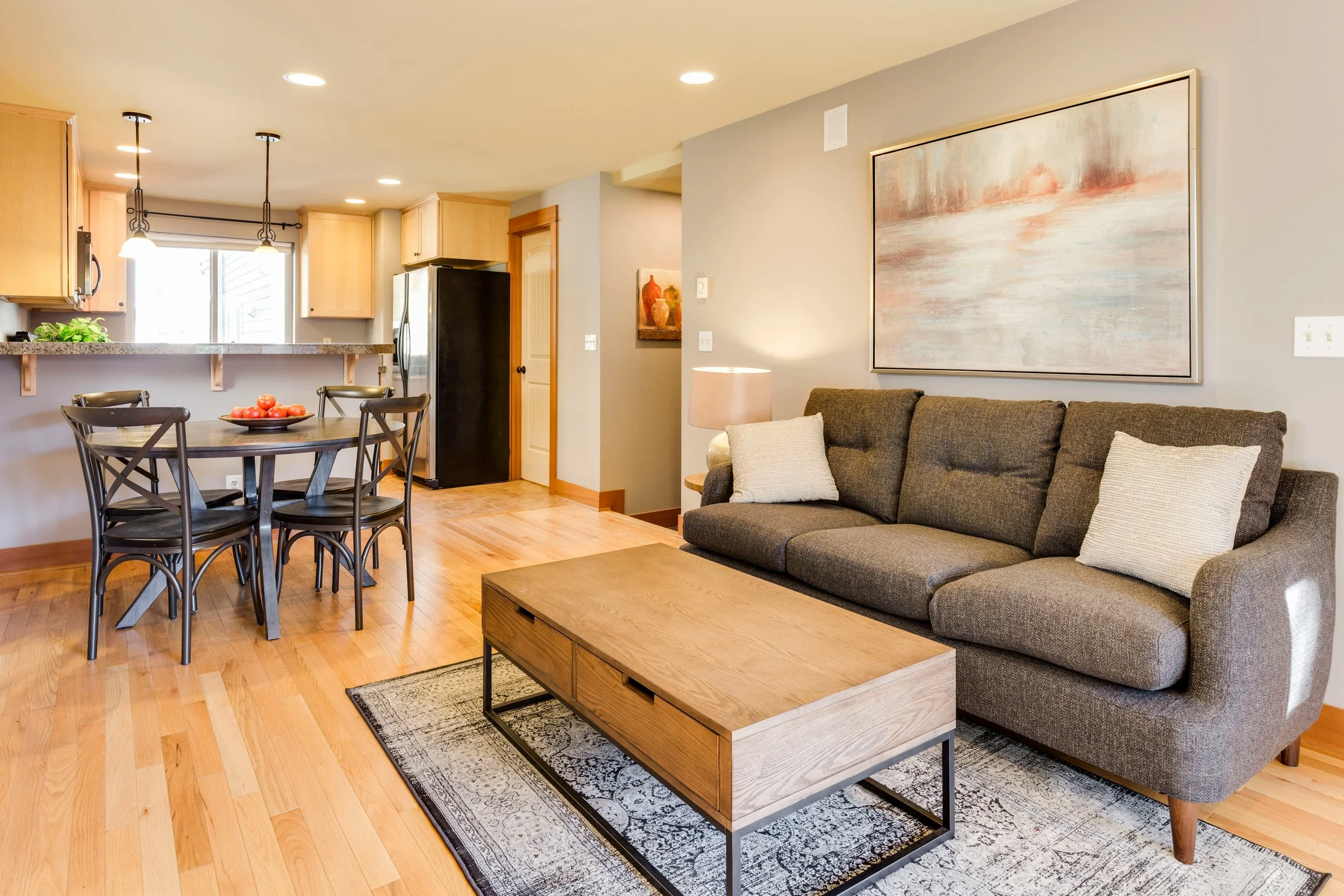
At first glance, worker accommodation and a standard short-term let can look almost identical.
Both provide somewhere to stay. Both can be furnished. Both may be booked for a few nights, several weeks or longer.
But the similarities largely stop there.
The needs of someone travelling for work are often very different from those of a holidaymaker or leisure traveller. A worker may be arriving after a 12-hour shift, staying for several weeks, working unusual hours or sharing accommodation with colleagues. Their priorities aren't necessarily a sea view, a boutique interior or the latest tourist attractions.
They need somewhere that works around work.
For employers, contractors, project managers and workers themselves, understanding the difference between worker accommodation and a standard short-term let can make finding the right property considerably easier.
What is worker accommodation?
Worker accommodation is accommodation specifically suited to people travelling or relocating for employment.
It can be used by:
Construction and engineering workers
Contractors
Infrastructure and utility teams
Healthcare professionals
Maintenance and installation teams
Manufacturing and industrial workers
Project-based employees
Travelling professionals
Temporary and seasonal workers
Worker accommodation can range from individual rooms to fully furnished houses and apartments, depending on the size of the workforce and the length of the assignment.
The key difference isn't necessarily the type of property.
It's the purpose of the stay.
A worker is using the accommodation as a practical base while carrying out a job or project.
That changes what matters.
Standard short-term lets are designed around short stays
A traditional short-term let is often designed with leisure travellers in mind. Think weekend breaks, city trips, holidays or people visiting friends and family.
The property may be perfectly suitable for someone staying for two or three nights.
But the requirements change when someone is staying for several weeks because of work.
A guest on holiday might spend most of their day exploring the local area.
A worker might leave at 5am, return at 6pm, cook dinner, do some laundry, catch up with work or simply want to rest. The accommodation needs to support that routine. And that's where the distinction becomes important.
Worker accommodation is about practicality
When choosing accommodation for workers, the question shouldn't simply be:
“Does it look good?”
A better question is:
“Will this work for the people staying here?”
Practical considerations can include:
Location
How close is the accommodation to the worksite?
A property that looks inexpensive can become far less attractive if workers have to spend significant time and money travelling to and from work every day.
Parking
For many industries, access to parking can be essential.
Workers may travel with tools, equipment or vehicles, making secure and convenient parking an important consideration.
Sleeping arrangements
If several workers are staying together, the layout matters.
Having appropriate sleeping arrangements and sufficient shared space can make a substantial difference over a longer assignment.
Kitchen facilities
Workers staying for weeks don't necessarily want to rely on takeaways or restaurants every night.
A properly equipped kitchen allows people to prepare meals, maintain routines and keep everyday costs under control.
Laundry facilities
Laundry becomes particularly important for longer stays, especially for workers whose jobs require specialist clothing or uniforms.
Wi-Fi and connectivity
For many modern workers, reliable internet isn't optional.
It can be needed for communication with employers, completing paperwork, accessing schedules, keeping in touch with family or simply unwinding after work.
The length of stay changes everything
One of the biggest differences between worker accommodation and a standard short-term let is duration.
A property that works perfectly for a two-night stay may not be suitable for a six-week project.
As the length of stay increases, seemingly minor details become increasingly important.
Storage.
Cooking facilities.
Laundry.
Workspace.
Parking.
Comfortable communal areas.
Access to local amenities.
The ability to maintain a normal routine.
This is why businesses arranging accommodation for workers should think beyond the nightly rate.
The real question is the overall value of the accommodation throughout the assignment.
Worker accommodation can make life easier for employers
Arranging accommodation for a workforce can quickly become an administrative headache.
There may be multiple workers, different arrival dates, changing project schedules and requirements for extensions.
Booking individual hotel rooms or standard short-term lets can create additional administration, particularly when several people need accommodation in the same area.
Worker accommodation can provide a more streamlined alternative.
Depending on the property and arrangement, a company may be able to accommodate several employees under one booking or within a small number of properties.
That can simplify:
Booking and administration
Communication
Arrival arrangements
Accommodation management
Extensions
Changes to project schedules
Cost management
For project managers and employers, reducing the number of moving parts can be just as valuable as reducing the accommodation cost itself.
Cost isn't just about the nightly rate
This is where businesses can sometimes make the wrong comparison.
A standard short-term let may advertise an attractive nightly price, but the headline figure doesn't necessarily tell you what the accommodation will cost in practice.
Consider the wider picture. If workers are travelling further to reach the site, transport costs increase. If there isn't a kitchen, food expenses may rise.
If several individual rooms are required, administration becomes more complicated. If a booking has to be changed repeatedly because of project delays, flexibility becomes important.
The cheapest accommodation on paper isn't automatically the most cost-effective solution.
For businesses, it can be more useful to calculate the total cost of accommodating the workforce.
Worker accommodation needs to work around working life
Perhaps the biggest difference is the lifestyle of the guest.
A leisure traveller's schedule tends to revolve around their destination.
A worker's schedule revolves around their job. That means the accommodation needs to accommodate early starts, late finishes, shift patterns and longer periods away from home.
A good worker accommodation solution recognises this. It's not about creating a holiday experience. It's about creating a reliable home base.
Somewhere workers can eat, sleep, relax, recharge and prepare for the next working day.
Worker accommodation isn't necessarily basic
There's sometimes an assumption that accommodation for workers simply means the cheapest available option.
That doesn't have to be the case.
Workers spending weeks away from home still deserve somewhere clean, comfortable and well maintained.
In fact, the quality of accommodation can have a wider impact than many businesses realise.
When people are away from home for extended periods, having somewhere comfortable to return to can contribute to a better overall experience.
A well-equipped property can provide the privacy and independence that isn't always possible with traditional hotel accommodation.
What should businesses look for?
If you're arranging accommodation for employees or contractors, consider asking the following questions before booking:
1. How close is it to the worksite?
Travel time can have a major impact on both cost and convenience.
2. Is the property suitable for the length of the stay?
A property suitable for three nights may not be appropriate for three months.
3. How many workers can it comfortably accommodate?
Look beyond the number of beds and consider the overall layout.
4. Are there cooking and laundry facilities?
These can become essential for longer assignments.
5. Is parking available?
Particularly important for workers travelling by van or carrying equipment.
6. Is reliable Wi-Fi available?
Connectivity can be essential for both work and personal use.
7. How flexible is the booking?
Projects change. Make sure the accommodation arrangement can cope with those changes.
8. Who manages the property?
Having a responsive accommodation provider can make a significant difference when something needs attention.
Worker accommodation vs standard short-term lets: the key difference
Ultimately, the difference comes down to designing accommodation around the reason someone is staying.
A standard short-term let is often perfectly suitable for leisure travel.
Worker accommodation is designed around the practical realities of working away from home.
Neither is inherently better.
They're simply intended for different purposes.
For a business sending employees to a project, a contractor travelling to a new site or a workforce requiring accommodation for several weeks, choosing a solution designed with workers in mind can make the entire process more straightforward.
Finding the right accommodation for your workforce
When you're responsible for accommodating a team, the property itself is only part of the equation.
You also need reliability, communication and an understanding of what workers actually need during their stay.
At Silverlake Group, we provide accommodation solutions for workers, contractors and businesses looking for practical places to stay while working away from home.
Whether you're arranging accommodation for a small team or managing requirements for a larger project, the right accommodation can help keep the focus where it belongs — on the work.
Because when people are working away from home, accommodation shouldn't create another problem to solve.
It should be one less thing to worry about.